Armor
You can use armor to protect your vehicle from munitions.
Thickness
Higher penetration threats require thicker effective armor to defeat.
In the clip above, 100mm is more than thick enough to stop a machine gun, but it is not enough for the high penetration rounds from a cannon.
Effective armor is the “line of sight” thickness that the bullet must pass through.
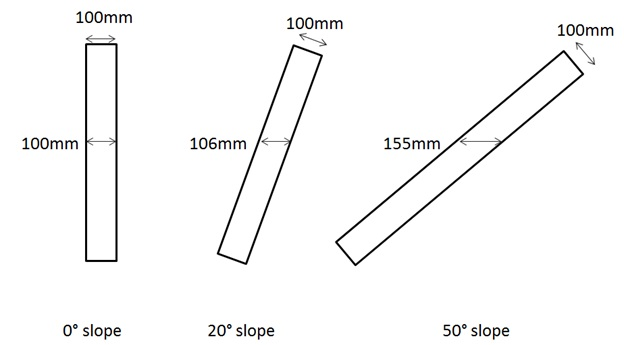
A thinner angled plate can have the same effective thickness as a thicker flat plate.
If you are interested, you can calculate effective armor with this formula:
\[\text{Effective Armor} = \frac{\text{Nominal Thickness}}{\sin(\theta)}\]
Tanks generally concentrate most of their armor at the front, then the sides, then the rear/roof/floor.
Health (Ductility)
With the same thickness, a healthier prop will last longer under attack.
Setting the ductility of a prop can change its health at the cost of weight, or vice versa.
Armor Tool
Using the ACF armor tool, you can set the thickness and ductility of a prop:
Armor Setup
We will begin armoring the tank we worked on. If you want to follow along, download this dupe:
The upper/lower front plates are angled at 30 degrees from horizontal. With how triangles work, this results in a height of exactly 42.
You can count the squares on the sprops to figure out their sizes. Follow along.
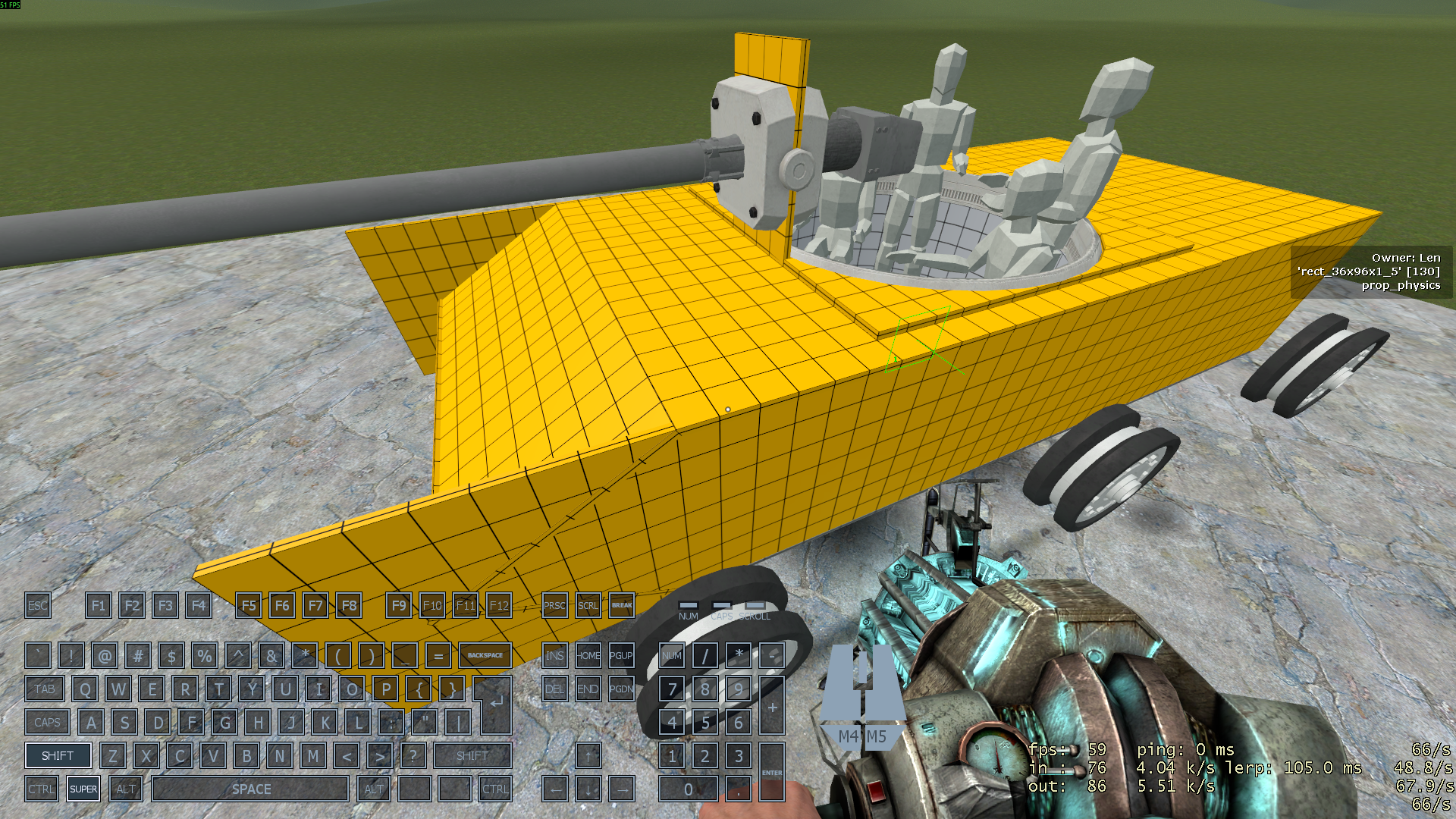
Make sure to parent all these props to the hull.
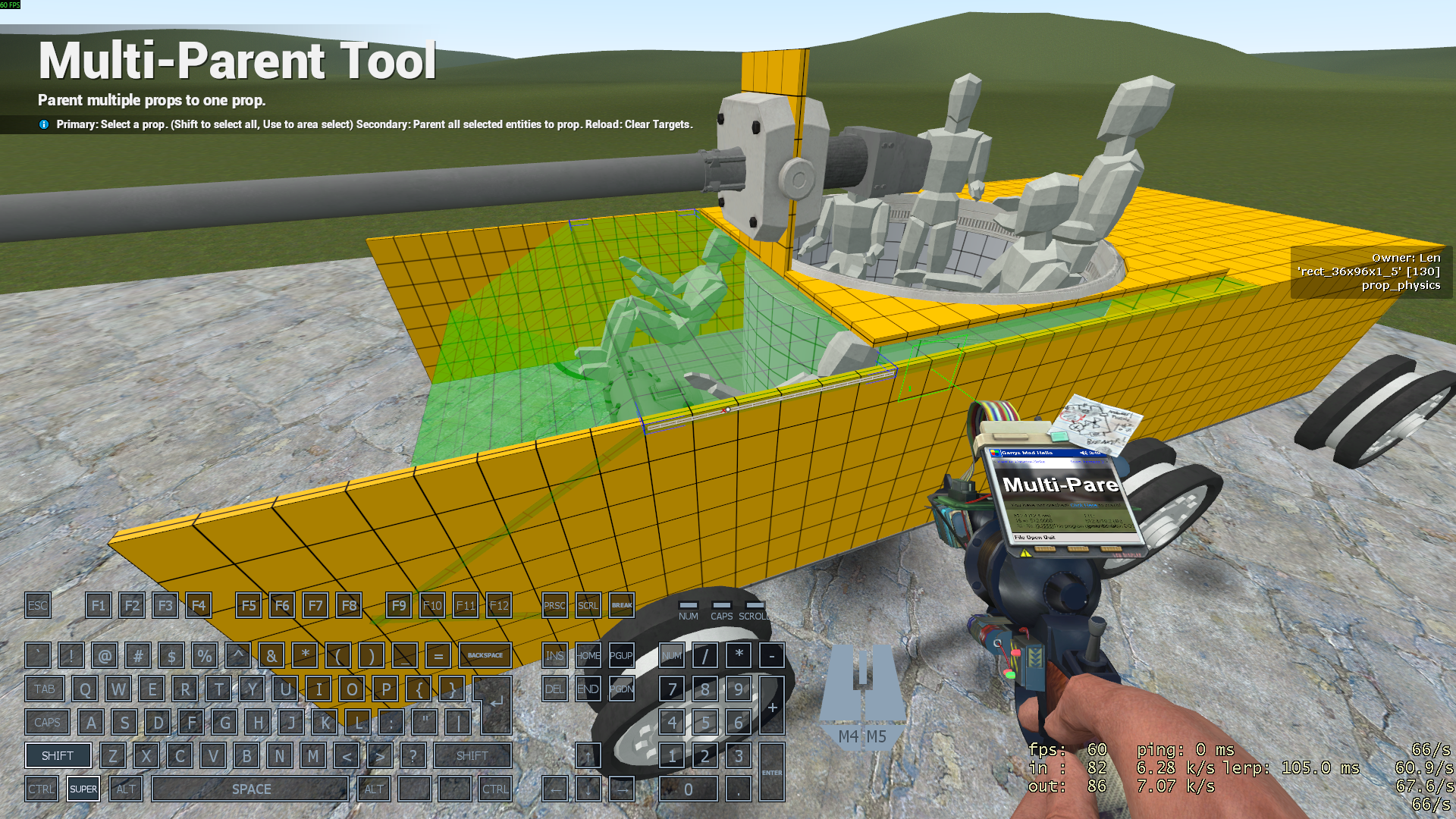
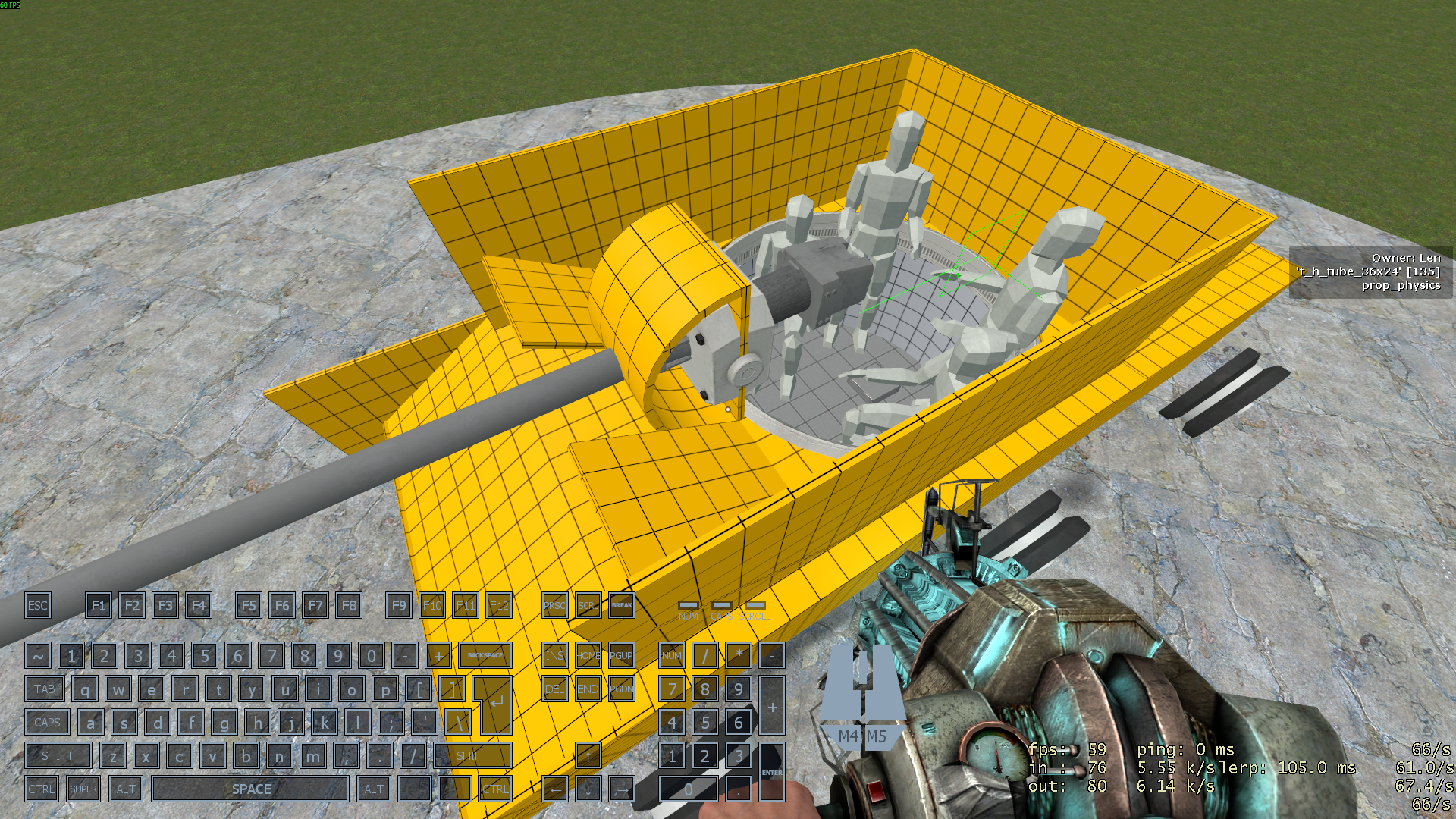
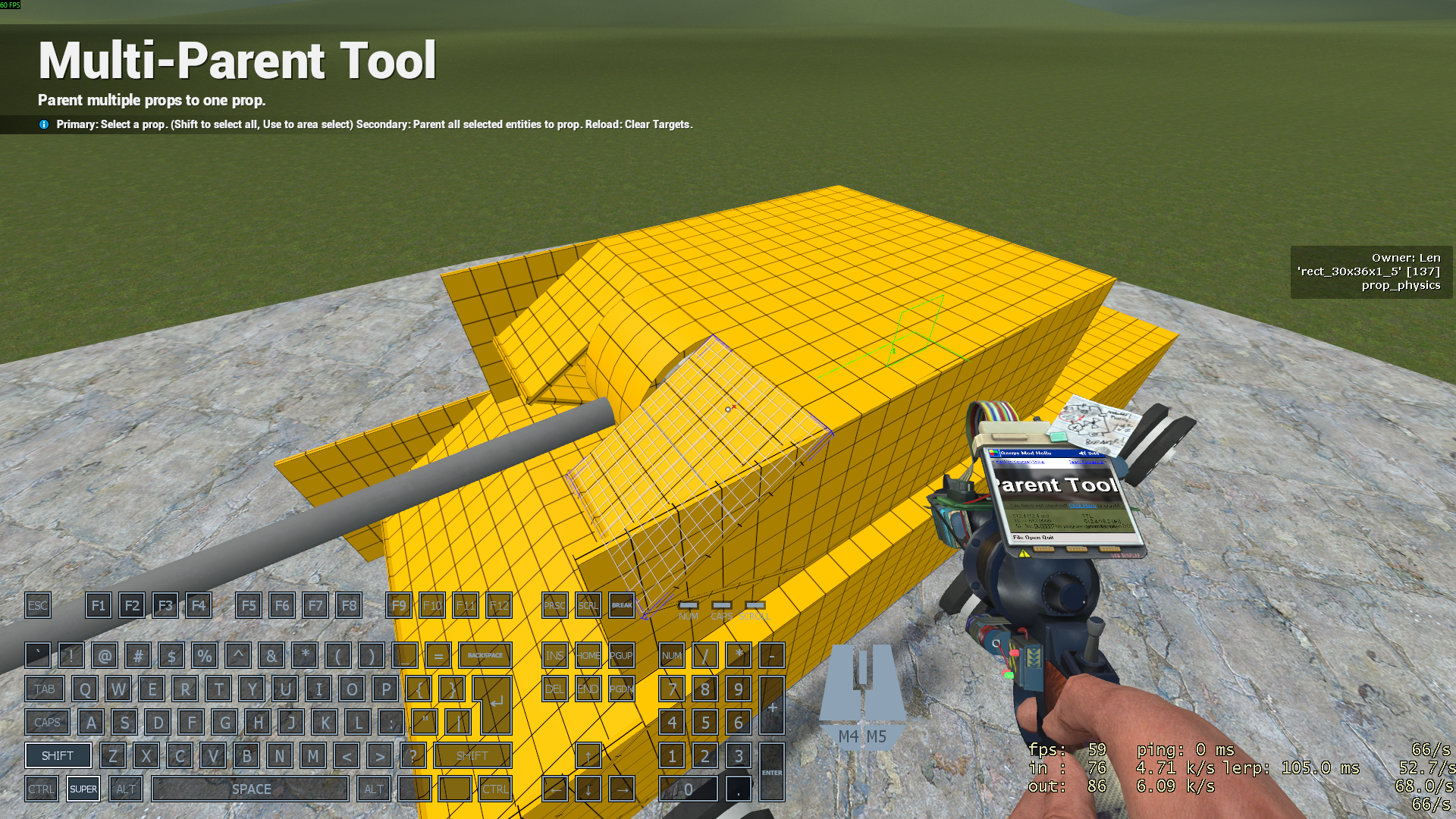
Then multiparent all these props to the horizontal turret ring
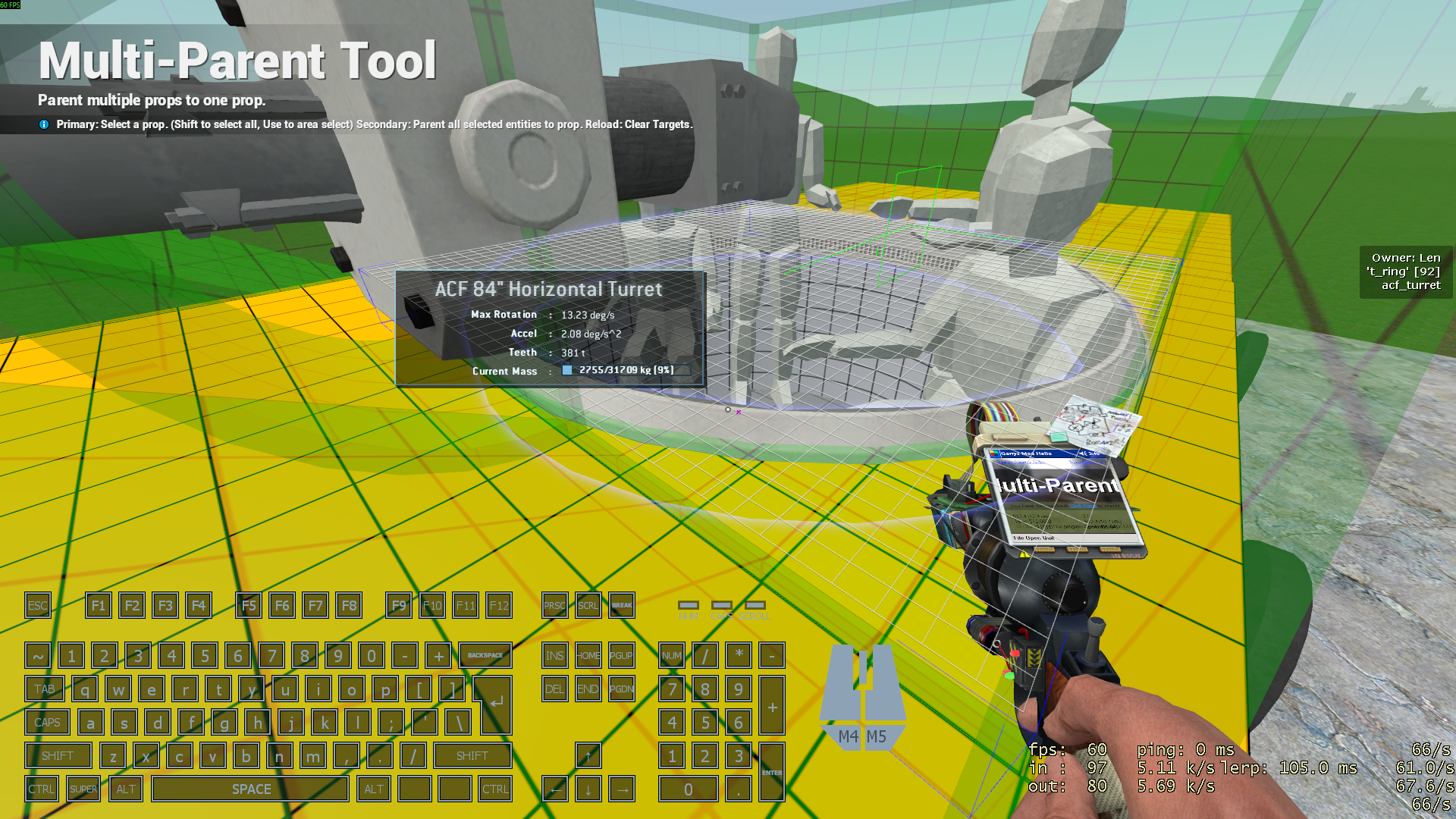
Visual Clipping
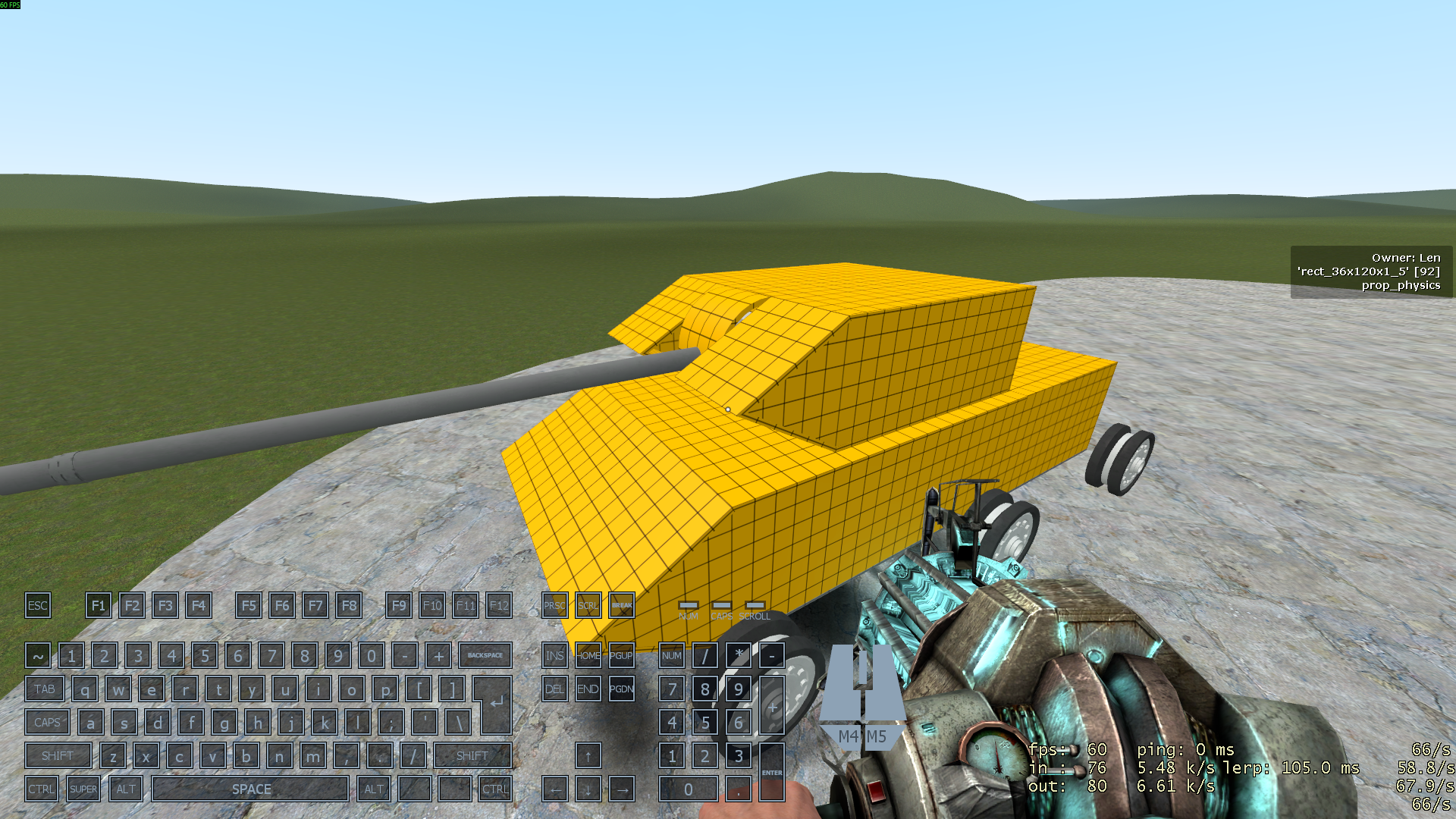
Propper clipping (aka visual clipping) is a tool that lets you “clip” off parts of a prop, both visually and for acf projectiles.
LEFT CLICK on the plate you are clipping along, then LEFT CLICK on the plate you want to clip, then press RIGHT CLICK to complete the clip.
Try applying it to the front like so:
Then apply it to the turret:
Armoring
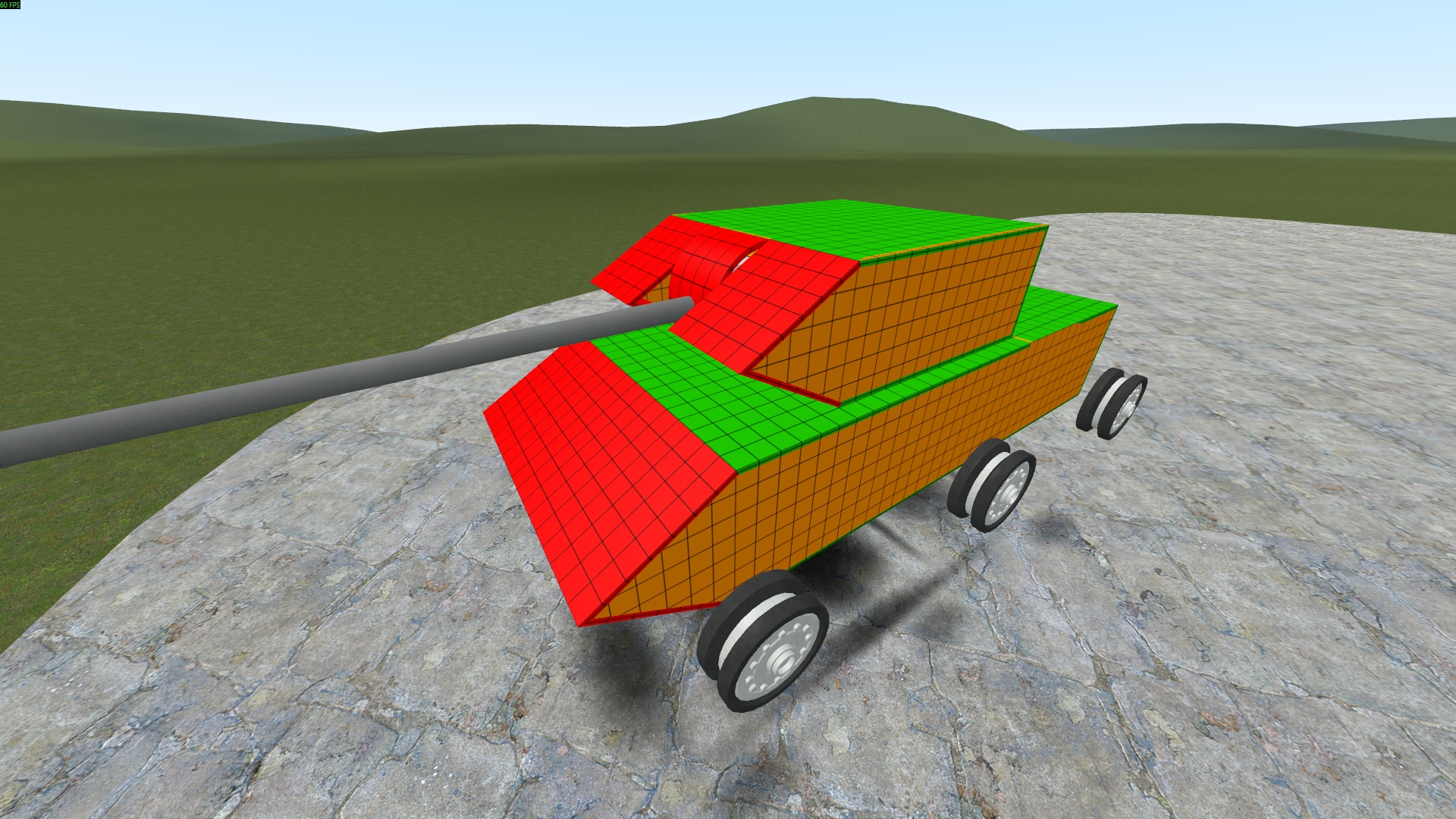
Tanks generally concentrate most of their armor at the front, then the sides, then the rear/roof/floor.
I have colored the tank to reflect this, with red for the highest concentration of armor, orange for less and green for least.
Now try using the armor tool:
We suggest using:
100mm 0 ductilityon the front50mm -40 ductilityon the sides30mm -40 ductilityon the roof and rear